


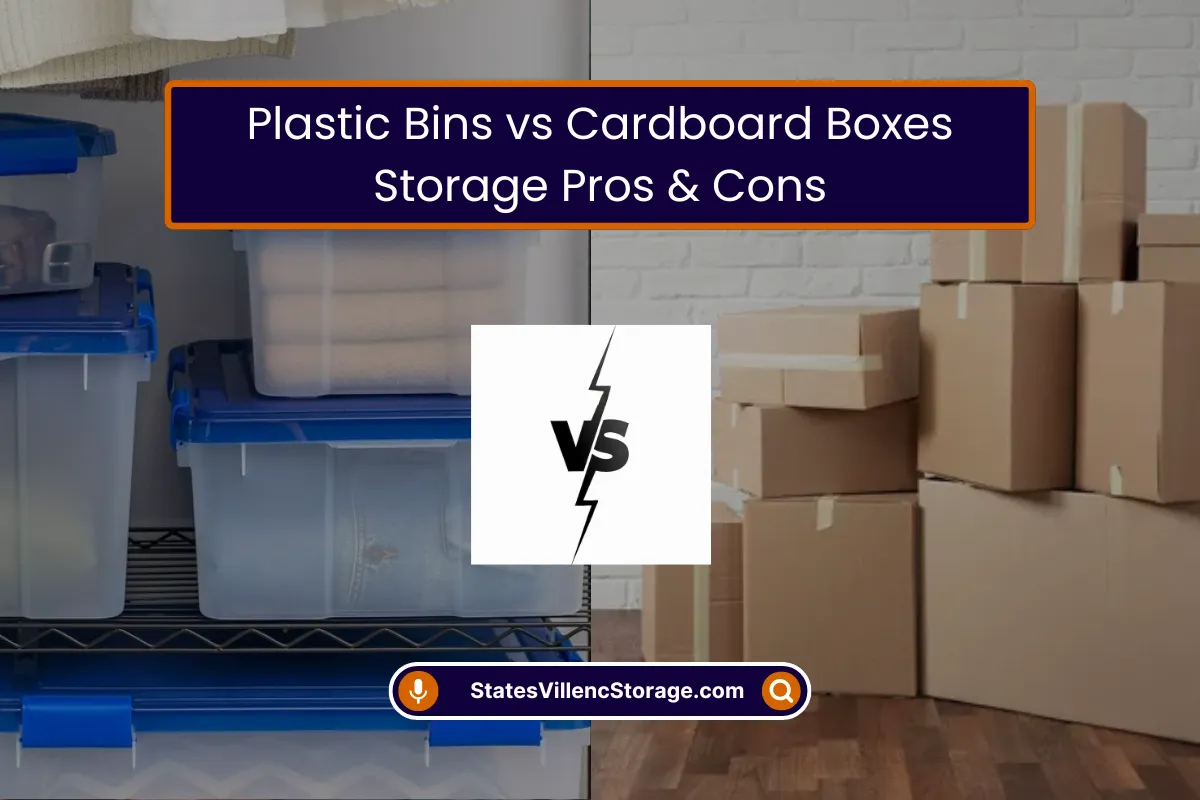
Hey there. So, you’re packing stuff away for the long haul, huh? I get it. Maybe you’re finally clearing out the garage, or your kid moved out and left a lifetime of… well, stuff. And now you’re standing in the storage aisle at the store, holding a cardboard box in one hand and a plastic bin in the other, totally stuck.
Which one? I can’t tell you how many times customers have asked me this. My name’s Mike, and I’ve been helping folks at Downtown Mini Storage store their things for over a decade. I’ve also helped them retrieve their things years later. And let me tell you, the choice you make right now in this aisle? It makes all the difference.
Let’s have a real talk about it. No fancy jargon. Just what I’ve seen work, and what I’ve seen fail miserably.
The Cardboard Box: An Old Friend with Some Serious Flaws
Look, I love a cardboard box. Who doesn’t? They’re cheap (or free if you hit up the liquor store on a Tuesday morning). They fold flat. They feel like you’re getting stuff done. For moving next week or storing some old magazines in the closet? Perfect.
But here’s the raw truth I’ve learned from unlocking thousands of storage units: cardboard boxes have a expiration date.
I want you to picture something. In our facility, even the cleanest, most secure units aren’t hermetically sealed tombs. There’s always a tiny bit of ambient moisture in the air. Over months and years, that moisture soaks into cardboard like a sponge. It’s slow. You don’t see it happening. But then one day, you go to lift a box you packed three years ago, and the bottom just… gives out. Your Christmas ornaments are now in a sad, damp pile.
And then there are the critters. I’ll be blunt. Mice and bugs see a stack of cardboard boxes as a five-star hotel. It’s shelter and a snack. I once helped a sweet older woman unpack her vintage linens, only to find the box lined with… well, let’s just say evidence of a rodent family reunion. She cried. I felt awful. The cardboard offered zero protection.
So, when do I, Mike, actually recommend cardboard?
For stuff you know you’ll need within a year.
- For things that are already kinda tough and you wouldn’t cry if they got dusty—think old paperback books, basic kitchenware, or those board games missing half the pieces.
- When you’re on a seriously tight budget and just need a temporary solution.
- Think of cardboard as a short-term rental. It gets the job done for a little while, but you wouldn’t want to live there forever.
The Plastic Bin: The Boring Hero You Need
Okay, plastic bins. They’re not glamorous. They cost real money. And when they’re empty, they hog space in your basement. I get why people hesitate.
But let me show you the other side of my job—the good side. The side where someone opens their unit after five years, pops the lid off a plastic bin, and their grandmother’s quilt smells exactly like it did when they packed it. No must. No stains. No surprises. The smile on their face? That’s why the plastic bin is the unsung hero.
That plastic wall is a fortress. Bugs can’t eat it. Mice can’t chew through it (trust me, they try and fail). A little accidental humidity in the air? It beads right off the lid. We had a small pipe leak in a hallway once—the units were fine, but some water seeped under a door. The customer’s plastic bins? Dry as a bone inside. The one cardboard box they had? A total loss.
The clear sides are a game-changer, too. You can see your life in there. No more writing “MISC” on a box and forever wondering what “misc” actually meant.
Here’s my Mike-approved list for plastic bins:
- Anything with fabric: Clothes, linens, curtains.
- Anything with sentimental value: Photo albums, letters, your kid’s art projects.
- Anything paper you need: Tax documents, manuals, important files.
- Anything that would be ruined by dust: Collectibles, hobby supplies, good dishes.
You’re not buying a box. You’re buying insurance.
The Real-World Combo & How We Fit In
Most people end up using a mix, and that’s smart. Here’s my practical advice: Use plastic for the “heart” stuff—the things you love. Use cardboard for the “practical” stuff—the things you just need to keep.
And this is where your choice of where to store comes in. Because even the best plastic bin can get warped if it’s sitting in a unit that gets oven-hot in summer. Cardboard will turn to mush twice as fast in a damp, underground space.
This is the part where I tell you why we’re so proud of our units at Downtown Mini Storage. It’s simple. We keep them clean, dry, and at a steady temperature. It’s the stable foundation your stuff needs. Pair one of our climate-controlled units with your plastic bins full of memories, and you can sleep easy for years. You’re giving your things the best fighting chance.
One Last Piece of Advice from Me to You
However you pack, do me a solid. Label everything with a fat, permanent marker. Not just the top—the side, too. When you stack boxes, you’ll thank yourself. And leave a little walking path in your unit. Cramming things wall-to-wall means you’ll never get to the box in the back.
Packing for long-term storage isn’t about just putting things away. It’s about preserving a piece of your life so it’s ready for you when you need it again. Choose your containers like you’re choosing a guardian for those things.
If you’re ever near our office, stop in and ask for me. I’m happy to take a look at what you’re storing and give you my honest, human, been-there-seen-that opinion. No charge, just good advice.
Good luck with the packing. You’ve got this.







0 Comments