


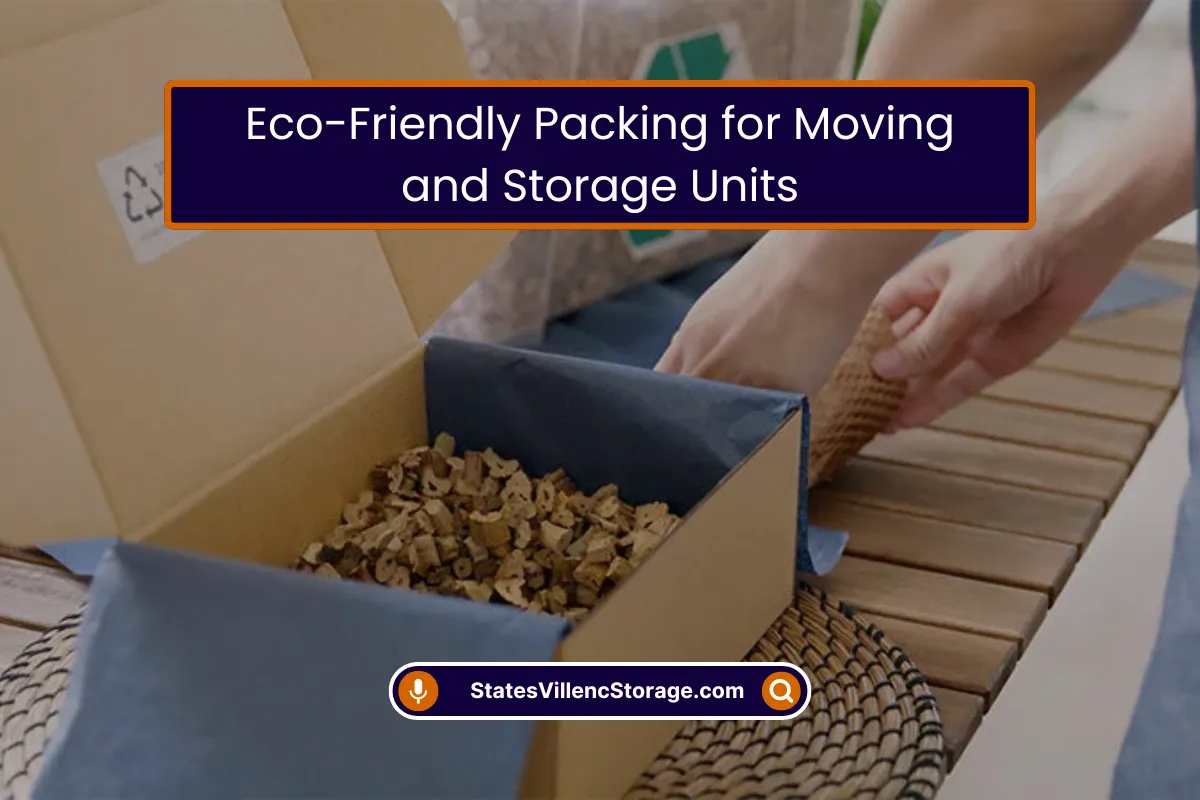
Hey there. If you’re about to pack up your life—whether for a move or just to clear some space at home—you’ve probably hit that same moral speed bump I hit last year.
You stand in the store, a roll of plastic bubble wrap in one hand, and you think: “This stuff is going to outlive me, my kids, and probably my grandchildren… just to protect my coffee mugs for six months.” It feels ridiculous.
But the “eco-friendly” options? They can seem… questionable. Will my good wine glasses really survive wrapped in yesterday’s newspaper? Is “compostable packing peanut” just code for “will dissolve if someone looks at it funny?”
I’ve been there. And after helping thousands of folks store their stuff, I’ve seen what truly works and what ends up as a box of regrets. So let’s talk real-world, effective, earth-friendly packing. No guilt, no greenwashing, just stuff that works.
Why Bother? (The Real Reason)
Look, I’m not here to lecture you. The reason to ditch the plastic isn’t just about saving the whales (though, hey, that’s cool). It’s about three practical things:
- It’s less messy. Ever opened a box and had styrofoam peanuts literally fly everywhere? That static-cling nightmare doesn’t happen with paper.
- It’s often cheaper. The best green packing supply is the one you already own. We’ll get to that.
- Unpacking is nicer. Instead of wrestling with a mountain of plastic film and feeling guilty, you can just recycle the paper and toss the linens in the wash. It’s a calmer, cleaner start in your new place (or a simpler retrieval from storage).
The Golden Rule: Use What You’re Already Packing
This is the biggest hack. You’re already boxing up your towels, sheets, and clothes. So use them as the packing.
- Your bath towels and hand towels are perfect for wrapping dishes, picture frames, and small appliances. They’re thick, they cushion, and you have to pack them anyway.
- T-shirts, sweaters, and socks are genius for fragile items. A wine glass nestled inside a sock is surprisingly secure. Stuff a sweater around a vase. Wrap a t-shirt around a ceramic figurine.
- Bed sheets and blankets are your furniture savers. Drape them over table tops, sofa arms, and headboards to prevent scratches. They’re way better than that one-use plastic film.
I once packed an entire kitchen using only my linens and some newspaper. Not a single thing broke. It felt like a magic trick.
Beyond the Linens: The Supplies Worth Buying
Sometimes, you need a little extra. Here’s what I actually recommend to our customers:
- Cardboard Boxes (But Get Them for Free). Do not, I repeat, DO NOT rush out and buy a stack of new “eco-friendly” boxes. The most eco-friendly box is the one that already exists. Hit up your local liquor store. They have small, sturdy boxes perfect for books and glassware. Bookstores, grocery stores… just ask. The boxes are free, and you’re giving them a second life. When you’re done, flatten and recycle them. Full circle.
- Kraft Paper or Butcher Paper. This is my MVP. You can buy a giant roll for cheap. It’s that thick, brown, un-inked paper. Crumple it up to fill empty spaces in boxes (those voids are what cause breaks). Use it to wrap items. It’s strong, it’s recyclable, and it doesn’t leave newsprint smudges on your possessions. It’s the workhorse of green packing.
- Biodegradable Packing Tape. Regular packing tape is plastic. Now, you’re not going to save the world with tape, but if you want a cohesive system, paper-based packing tape is a thing, and it works just fine for sealing boxes that will sit in a dry storage unit.
A Quick Word on “Biodegradable” Plastics
Be skeptical. A lot of that “biodegradable” or “compostable” plastic bubble wrap only breaks down in a special industrial composting facility that hits 130 degrees Fahrenheit. If it goes to a regular landfill? It sits there like regular plastic. It’s often just greenwashing. I’d skip it and go with the real stuff: paper and cloth.
How This All Plays in a Storage Unit
This is where my day job comes in. When you’re packing for a storage unit, you’re packing for the long haul. Here’s how to make green packing work for that:
- Label. Everything. Clearly. You cannot overdo this. When every box is a brown cardboard box filled with brown paper, you will have no idea what’s inside. Write “KITCHEN – PLATES & BOWLS” in big, bold marker on at least two sides. Trust me, future-you will send past-you a thank-you note.
- Prioritize a Dry Space. Paper and cardboard are friends of dry environments. If you’re in a humid area, or storing things for a long time, a climate-controlled storage unit is a game-changer. It’s not just for antiques; it’s for keeping your sturdy, eco-friendly boxes from getting damp and mushy. We offer them for exactly this reason—to protect your things, however you pack them.
- Pack Densely. A half-empty box will sag and collapse. Use that crumpled kraft paper to fill every gap, right to the top. A fully packed box is a strong box.
The Takeaway
You don’t have to do a 100% perfect, zero-waste pack. Just start. Wrap your next batch of mugs in dish towels. Get your boxes from the wine shop. Pick up a roll of kraft paper.
It’s genuinely easier, cheaper, and less stressful. And when you’re ready for a clean, secure, and accessible place to keep it all, that’s where we come in. Our job is to be the safe, final piece of the puzzle for your belongings—whether they’re wrapped in heirloom quilts or yesterday’s paper.
Good luck with the pack! You’ve got this.







0 Comments