


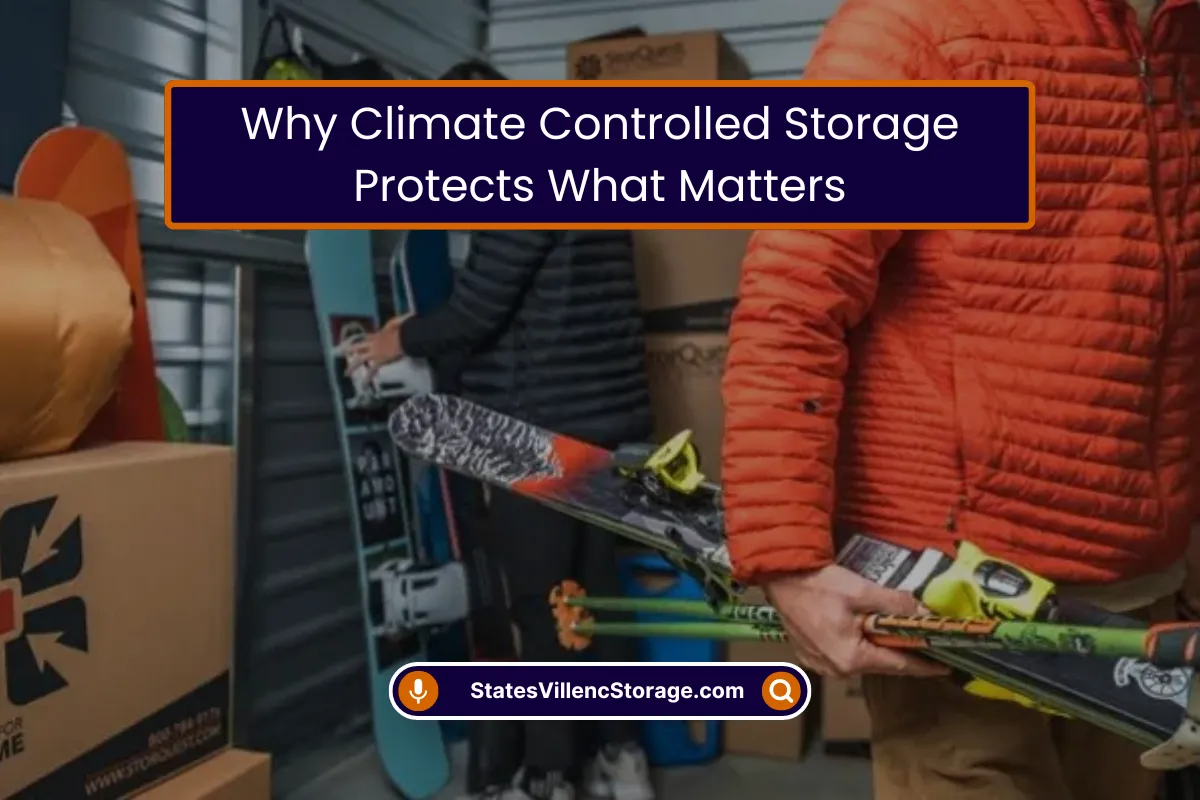
Hey there. Let’s get real for a second. We’ve all got that stuff. Not the everyday plates and towels, but the things that actually mean something. That guitar you swear you’ll relearn. The wedding dress you can’t part with. Your dad’s old record collection.
You shove it in the garage, the attic, or a cheap storage unit thinking, “Out of sight, out of mind. It’s safe.”
But here’s the ugly truth nobody talks about: you’re probably slowly cooking it. Or pickling it with humidity.
The Slow-Motion Disaster in Your Attic
Think about your attic in August. It’s like a sauna up there, right? Now picture your family photo albums sweating it out in a cardboard box. The heat makes the pages stick together. The glue melts. Those pictures of your kids’ first birthdays become a gooey, tragic mess.
Or your garage in winter. It’s freezing. That beautiful solid wood dresser you’re saving for your first “real” house? The wood contracts, then expands again in the summer humidity. After a few seasons of this, you’ll hear a sickening crack from the joints. Warped for good.
That’s what happens when you treat precious things like they’re just…things.
This is where my job comes in. I work with storage every day, and I’ve seen the heartbreak when people open a unit they’ve had for years, only to find their treasures ruined. Moldy leather. Rusted tools. A vintage comic book collection stuck into a solid block of paper. It’s awful.
That’s why I became a total evangelist for climate control. It’s not a fancy add-on. It’s basic preservation.
Swamp vs. Spring: The Storage Difference Explained
Let me break it down without the jargon:
A regular storage unit is just a sealed room. It keeps rain off, but it breathes with the outside air. If it’s 98 degrees and muggy outside, it’s a swamp inside. If it’s 20 degrees, it’s a freezer.
A climate-controlled unit is like putting your belongings in a gentle, perpetual spring. We constantly manage two things:
- The temperature (kept between a cool 55°F and a comfy 80°F).
- The humidity (kept in that Goldilocks zone—not too dry, not too damp).
Is Your Stuff on the “Endangered” List?
So, what’s on your “Endangered by the Attic” list? You might be surprised:
- Anything with wood. Furniture, instruments, antique frames. Wood is alive; it breathes. Unstable air makes it swell and shrink until it gives up and cracks.
- Anything with glue or vinyl. Records warp. Photo albums fuse. That expensive mountain bike’s carbon fiber composites? Yep, they can be affected too.
- Anything made of fabric or leather. Hello, mildew. That musty smell in an old basement? That’s the smell of damage. It gets into wedding dresses, heirloom quilts, and leather jackets permanently.
- Anything electronic or important. Tax documents, old film reels, your vintage video game console. Heat and moisture are a death sentence for circuit boards and paper.
The Simple Rule of Thumb (and The Right Questions to Ask)
Here’s my simple rule of thumb: If you wouldn’t leave it in your car for a week in July, or on your porch in a snowstorm, it doesn’t belong in a standard storage unit.
When you’re looking for a place, don’t just ask for a price on a 10×10. Ask the hard questions:
- “Is the climate control for the whole building, or is it dedicated to each unit?”
- “What’s your humidity monitoring like?”
- “Are these units in the middle of the building, away from the outside walls and doors?” (This one’s huge for consistency).
At Your Downtown Mini Storage, we built our climate-controlled floors specifically for this battle against the elements. Our units are in the interior core of the building, insulated from outside temperature swings. It’s not just air conditioning; it’s a whole system designed to create a stable, clean environment. We’ve seen what happens without it, and frankly, it sucks. We want you to open your unit in two years and find your stuff exactly as you left it—not as a science experiment.
The Real Math of Peace of Mind
Look, I get it. Climate control costs a bit more. But do the math. What’s the real cost of replacing your grandmother’s cedar hope chest? What’s the value of your kid’s first-year baby book?
Protecting your gear isn’t about renting space. It’s about buying peace of mind. It’s knowing that the things that hold your history are sleeping safely, waiting for you, exactly as you remember them.
And that’s worth every single penny.









0 Comments