


Alright, pull up a chair. I need to confess something.
My name’s not important, but my grandmother’s carnival glass fruit bowl is. It survived the Depression, five kids, and forty years in her dusty sideboard. It did not survive my brilliant idea to “just wrap it in a bunch of that bubble stuff” for my move in 2018.
The sound. Oh god, the sound. It wasn’t a dramatic crash. It was a soft, internal crick…crick…tinkle from inside the taped-up box. When I opened it, the bowl was in three clean pieces, nestled in its bubble wrap cocoon like a mocking joke. I’d followed the internet’s main advice! I’d used the bubble wrap!
That’s when my buddy Javier, who actually worked for a moving company for a decade, came over, saw my face, and said, “Man. You used just the wrap, didn’t you? That’s like wearing a helmet but no pads before a motorcycle crash.”
What he taught me next wasn’t on any “Top 10 Packing Hacks!” blog. It was a mindset. Bubble wrap isn’t a magic force field. It’s a single tool. And if you’re packing the good stuff—the stuff that has a story attached to it—you need a whole toolbox.
Let’s get into it.
First, the Pre-Wrap
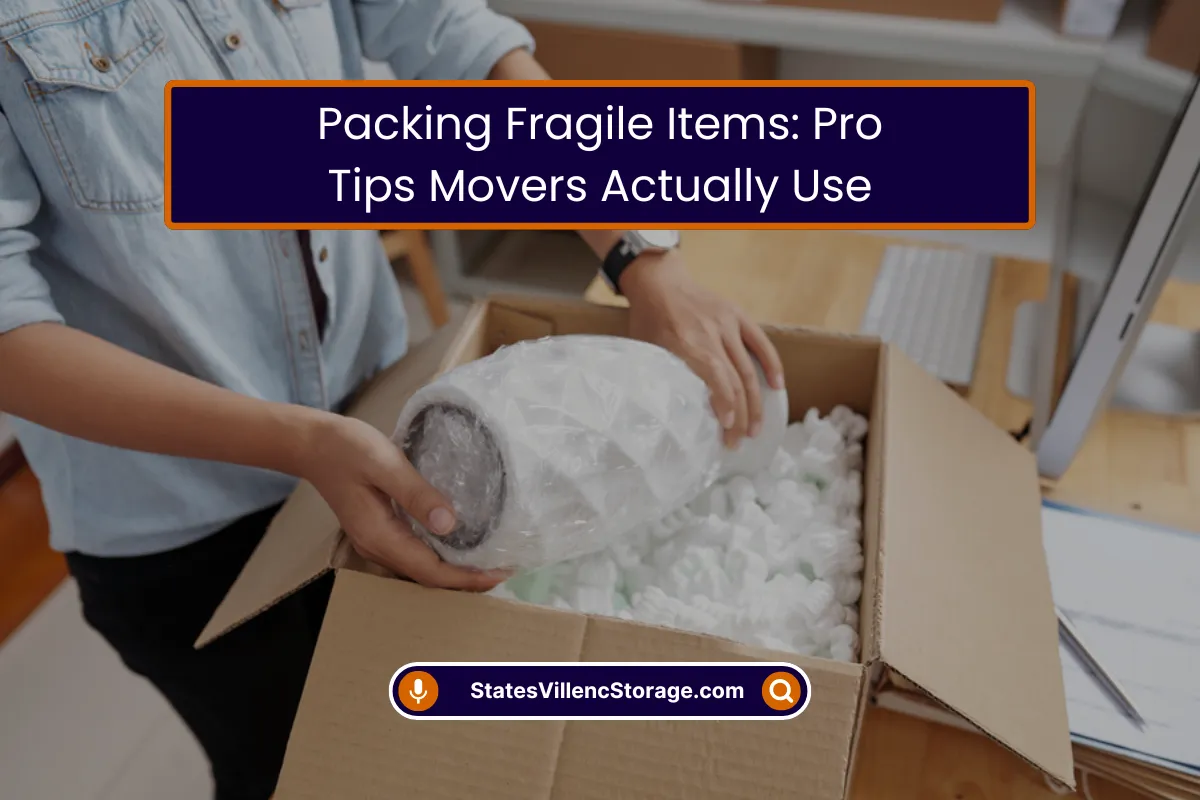
You know that feeling of pulling off bubble wrap and it’s left those weird, whispery scuff marks on your picture frame glass? That’s because you let plastic touch the thing directly. Stop it. Before a single bubble touches your treasure, give it a soft hug with something inert. I use plain white packing paper (the kind from the UPS store) or, and this is my secret weapon, those cheap, white shop towels from the hardware store. They’re soft, lint-free, and absorbent. Wrap the item gently. This layer isn’t for impact. It’s for love. It’s the cotton shirt under the knight’s armor.
The Bubble Wrap Trap
I was putting it on wrong for years. You? Probably too. The bubbles should face IN, toward the item. The flat, shiny side goes out. Why? Because that flat plastic is surprisingly rigid. The bubbles are the shock absorbers; they need to be on duty, in contact with the item. For my wife’s delicate teacup collection (another heart-attack-inducing pack job), I do this: small-bubble wrap first, for a snug fit. Then a layer of the big-bubble stuff for the major jolts. Tape it with painter’s tape so it’s snug, not strangling.
The “Russian Doll” Method (Or, How to Pack Like a Paranoid Museum Curator)
This is for the Heirloom Tier items. The fruit bowl’s replacement, a signed baseball, your kid’s first pottery project.
- Pack your wrapped item into a small, very sturdy box. Cram crumpled paper around it so it’s not going anywhere. Shake the box. Silence? Good.
- Find a box that’s comically larger. We’re talking a good 4-5 inches of space on every side.
- Put the small box inside the big one, dead center.
- Now, fill that moat. Not with bubble wrap. With soft, loose, energy-absorbing fluff. I use the biodegradable packing peanuts (the ones that dissolve in water, so they’re not evil), or honestly, my shredded bank statements. This moat is your crumple zone. Any impact hits the outer box, and the energy dissipates into this fluffy chaos before it ever reaches your inner box.
The Box Shake Test
This is the moment of truth. After you’ve packed a box, sealed it with good tape (not masking tape—it fails), pick it up. Hold it by the sides, not the bottom. Give it a firm, up-and-down shake. Listen.
- Clunk. Clatter. Slide. This is the sound of failure. Open it back up. You have voids. Fill them. The item must not be able to move at all.
- A dull, soft thump. This is the sound of victory. This is packing silence. This is what you want.
Long-Term Storage: The Sneaky Enemy is Time
Here’s the thing they don’t tell you about bubble wrap in storage. Over years, in heat, it can get sticky. It can leave a weird film on ceramics and glass. For anything going into storage for more than a few months, I swap the bubble wrap for that foam pipe insulation from the hardware store. It’s cheap, comes in a tube, and you can slit it and wrap it around anything. It’s inert. It just sits there, being fluffy, forever.
And climate? If your stuff is going into a standard garage unit that bakes in summer and freezes in winter, you’re asking for trouble. Wood warps. Photo albums stick together. That beautiful wooden chess set will crack.
This is the exact reason we got into the storage business in the first place. We saw people doing everything right—the careful wrapping, the perfect boxes—and then losing it all to a damp, hot storage locker. It made me mad. So our climate-controlled units aren’t a fancy upsell. They’re the logical, final, outer layer of this whole careful process. They’re the stable, dry, temperate environment that lets you know your carefully nested treasures are just… resting. Not fighting for their lives against the elements.
The Bottom Line
Packing fragile things is an act of respect. It’s slow. It’s kinda tedious. You’ll use more paper than seems reasonable. But when you finally open that box, months or years later, and pull out something perfect and whole… you’ll feel like a wizard. You didn’t just pack a box. You preserved a memory. And you can’t put a price on that.
Now, if you’ll excuse me, I have to go. I’m helping my sister move again next weekend. This time, the birds are making it.








0 Comments