


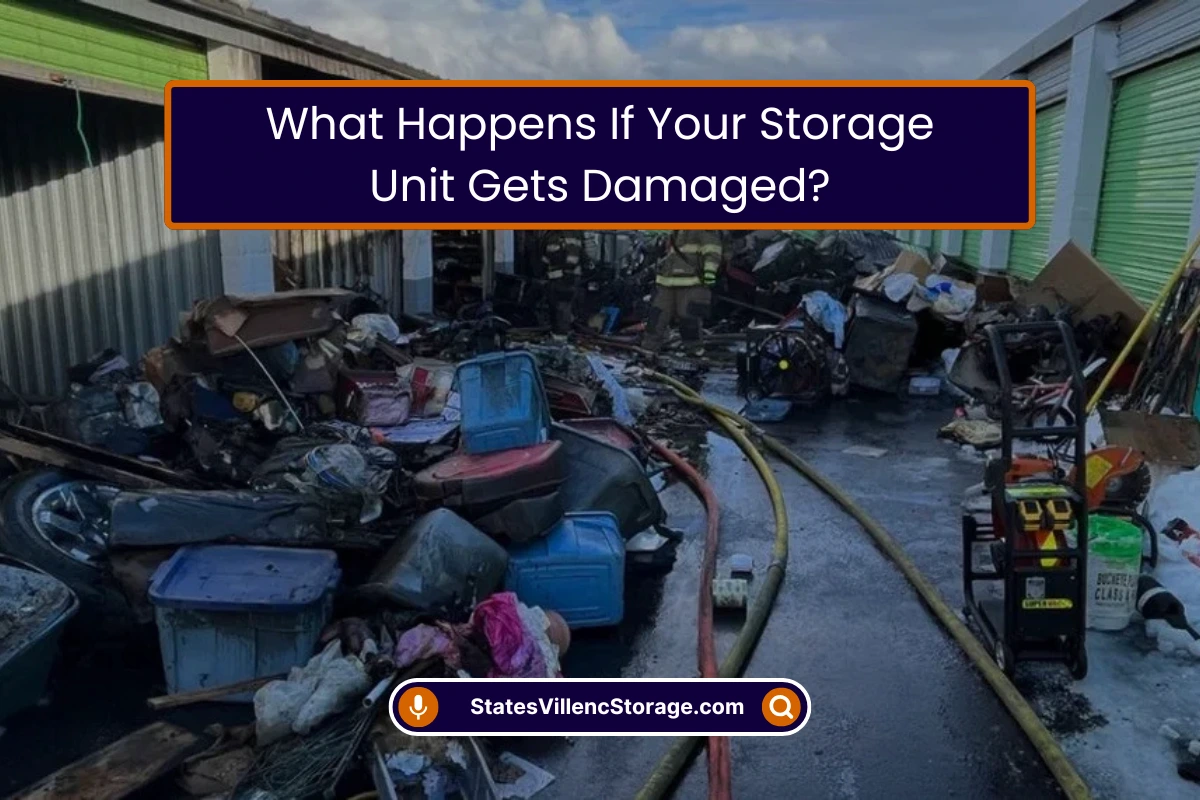
Let’s talk about a situation no one wants to wake up to.
You’ve been paying for your storage unit on time, every month. You’ve trusted that space to hold your dining table from your grandmother, your kid’s kindergarten artwork, maybe even your off-season wardrobe. Then comes the day you open that metal door, and your heart just sinks.
Water stains on the couch. A weird musty smell hitting your nose before you even flip the light on. Mold creeping up the side of a cardboard box.
Your items are ruined.
I’ve been there, and it feels like a punch to the gut. So what do you actually do next? Not next week. Not after you’ve had time to be angry. Right now.
Here is the step-by-step playbook.
First, Do Not Touch Anything Yet
I know your first instinct is to grab things, wipe them down, or start crying into a wet blanket. Stop. Take a breath.
You need to document the damage before you move a single item.
Grab your phone. Take photos of everything. Not just the ruined stuff – take wide shots of the entire unit, the walls, the ceiling, the floor. Then zoom in on the water line, the mold spots, the rust, the warped wood.
Video is even better. Walk through the unit slowly and narrate out loud: “This is unit B12, opened on March 15th. You can see water pooling near the back wall.”
Why be this detailed? Because if you plan to file a claim (and you should), no insurance company or facility manager believes “everything is ruined.” They believe time-stamped evidence.
Second, Check Your Rental Agreement Immediately
This is the boring paper you probably signed and never looked at again. Go find it.
Look for two specific things:
- Who is responsible for what damage. Many facilities clearly state they are not liable for water damage, mold, or pests. I hate that, but it’s true for a lot of places.
- Insurance requirements. Most storage units require you to have insurance – either theirs or your own.
If you bought the facility’s insurance, you need their claim number. If you used your homeowner’s or renter’s insurance, call them next.
Third, Call Your Insurance First, Then the Facility
Here’s where a lot of people mess up. They run to the storage office yelling before they call their own insurance.
Don’t do that.
Call your insurance provider first. Ask them:
- Does my policy cover water damage or mold in a storage unit?
- What is my deductible?
- Do I need a police report or facility report?
Then talk to the storage facility. Be calm. Be factual. Say something like: “I opened my unit today and found significant water damage. I have photos and video. Can you tell me if there have been any roof leaks, sprinkler issues, or flooding in this building?”
You might find out there was a known issue they didn’t tell you about. That changes everything.
How to Salvage What You Can (Without Making It Worse)
Not everything is a total loss. But you have to be smart about it.
Toss immediately if you see:
- Black or green mold on fabric, paper, or upholstery (don’t try to save it).
- Electronics that were sitting in water.
- Mattresses with any stains or swelling.
- Food or spices (even sealed – just no).
You might save if you act fast:
- Solid wood furniture that isn’t warped (dry it in sunlight, not indoors).
- Metal tools or equipment (wipe, dry, use rust remover).
- Plastic bins (wash with bleach water).
- Clothing that was in sealed vacuum bags.
But here is the honest truth – if water sat in that unit for weeks, your cardboard boxes turned into sponges, and whatever was inside is probably gone. Don’t risk your health for a soggy photo album.
When the Facility Is at Fault (And What That Looks Like)
Let me give you a real example. If the storage roof had a known leak for three months, and they didn’t fix it or notify you? That is on them.
If a sprinkler head burst because they didn’t winterize the system? Also on them.
But if you stored your items directly on the concrete floor without a pallet, and rainwater seeped in from a one-time storm? Many facilities will point to their contract and walk away.
That is exactly why at Downtown Mini Storage , we do things differently. We actually remind our customers to use pallets, we inspect our roofs monthly, and we have climate-controlled units that actively monitor humidity – not just “air conditioning sometimes.” Because we know your stuff matters. You shouldn’t have to become an insurance adjuster just to rent a storage space.
What If You Don’t Have Insurance?
This is the painful one.
If you didn’t buy insurance and the facility’s contract releases them from liability, you are likely looking at paying for everything out of pocket.
That doesn’t mean you have zero options. You can:
- Ask the facility for a goodwill credit (some will give you one free month if you stay).
- Check if your credit card offers purchase protection (unlikely, but check).
- Claim the loss on your taxes if these were business inventory or tools (talk to your accountant).
But honestly? The best move is to learn from this and never store without coverage again. Most storage insurance is $10–$15 a month. That is less than one takeout meal.
A Step Most People Skip (But You Shouldn’t)
After you clean out the unit, take photos of the empty space. Show the floor, the walls, the ceiling. Then write a short summary of what happened – dates, who you talked to, what they said.
Email that summary to yourself. That creates a timestamped record.
If you ever need to fight a bill, prove you cleaned the unit, or leave a review that warns others, you will have everything in one place.
One Last Thing – Don’t Beat Yourself Up
It is so easy to sit there and think “I should have used plastic bins” or “I should have paid for the better unit.” Stop.
Storage units are supposed to keep your things safe. That is literally what you pay for. When they fail, it is not a moral failure on your part. It is a systems failure.
What matters now is how you respond. Document, call, claim, salvage what you can, and then decide if you want to keep trusting that facility.
If this experience has you looking for a cleaner, drier, more honest place to store your belongings – come see us at Downtown Mini Storage. We will walk you through our units, show you our humidity logs, and even help you choose the right insurance so you never have to write a post like this again.
You have enough stress in your life. Your storage unit should not be one of them.





0 Comments